On most new builds and self-builds across Galway, Clare and Limerick, the painting is done in two visits. We call them Phase 1 and Phase 2. Getting the timing of each right is one of the simplest ways to protect the finish you are paying for.
Phase 1: bare plaster, empty house
Phase 1 happens after plastering is finished and dry, and before second fix. That means before kitchens, wardrobes, internal doors, skirting and flooring go in.
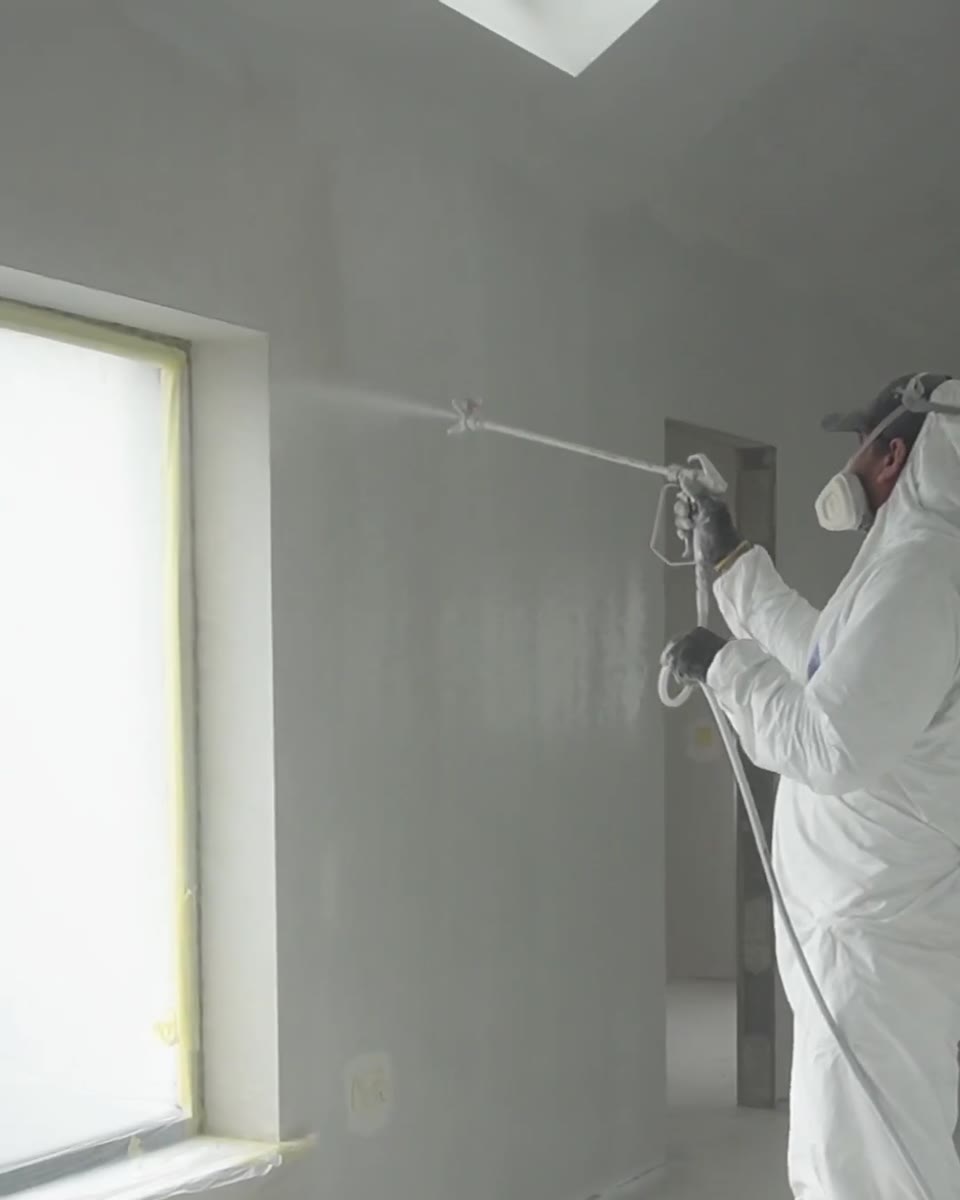
This is the best moment the house will ever have for painting. Every wall and ceiling is open, nothing needs to be protected except windows and frames, and the plaster can be prepared properly. A Phase 1 visit with us includes:
- A walk-through to assess the plaster and mark anything that needs attention
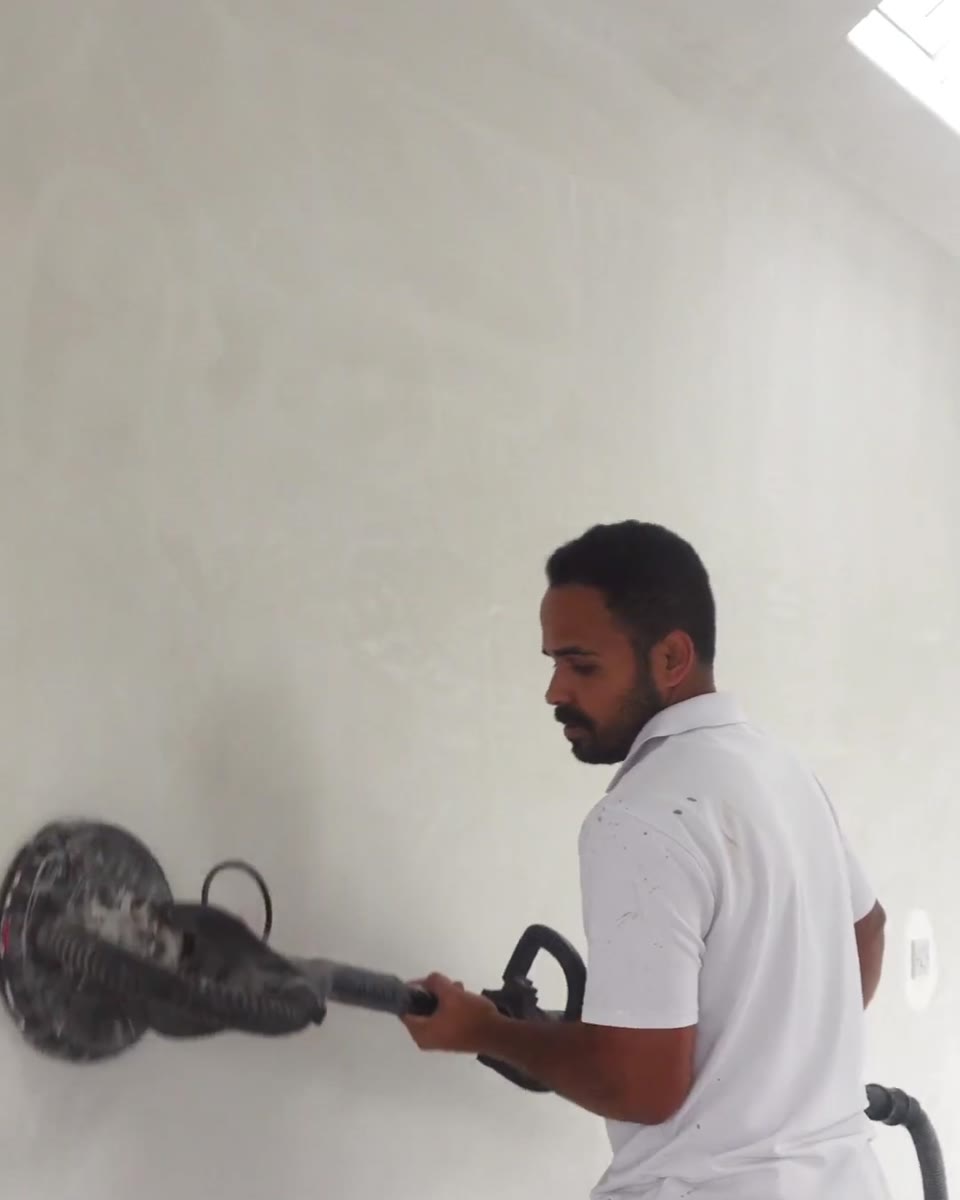
- Machine sanding of walls and ceilings with dust extraction
- Filling and spot repairs
- Full masking of windows, frames and anything already fitted
- A full primer coat on the fresh plaster
- Spray-applied finish coats on ceilings and walls
Because the house is empty, spraying gives a perfectly even finish with no roller texture, and large open-plan areas and high ceilings are coated far more consistently than by hand.
Let the plaster dry first
The most common timing mistake is painting plaster that is not dry. Moisture trapped behind paint can cause poor adhesion and patchy results later. Drying time depends on the thickness of the plaster, the time of year and whether the heating is on, so we check the walls before we start rather than going by the calendar. If it is not ready, we will tell you.
Phase 2: after second fix
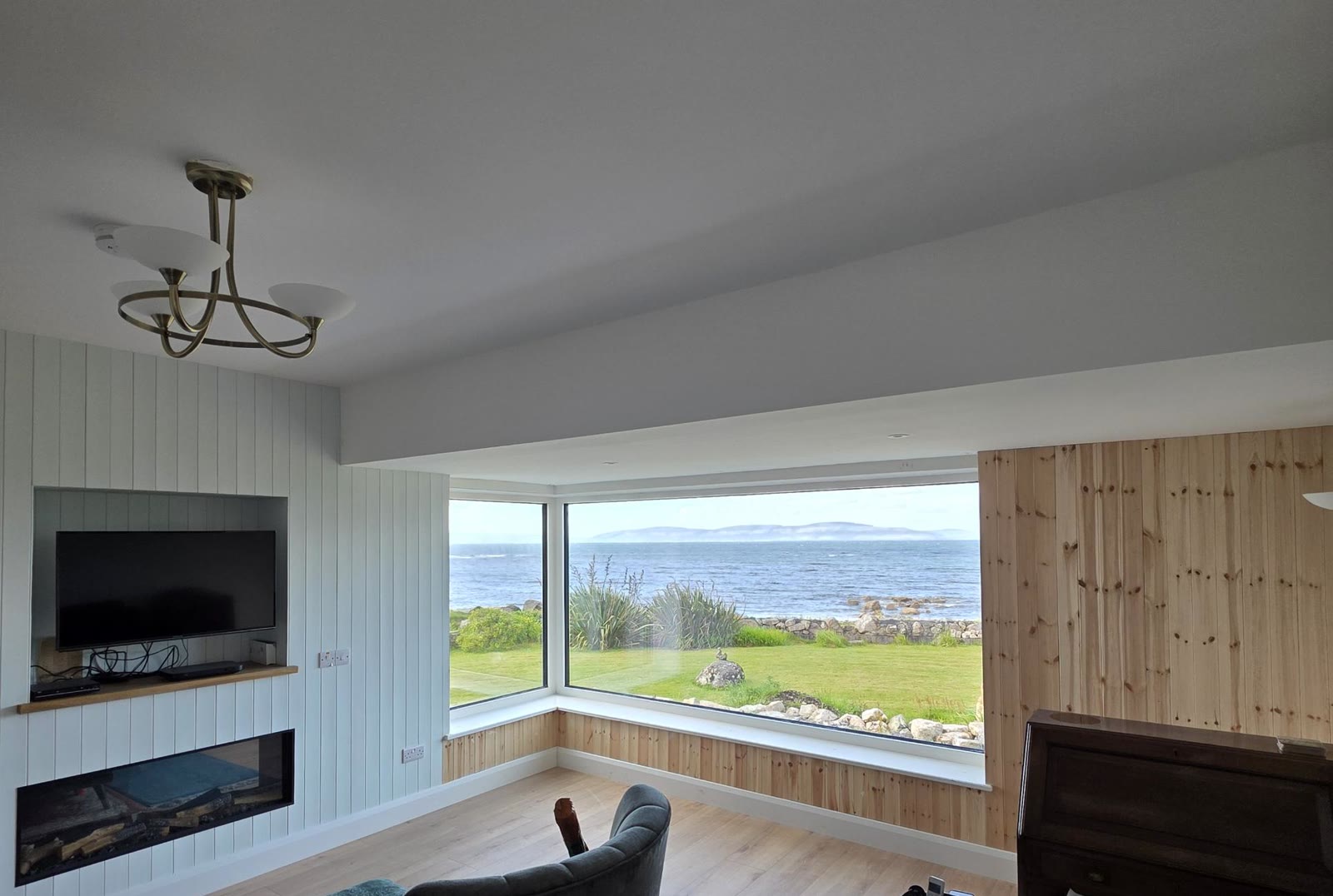
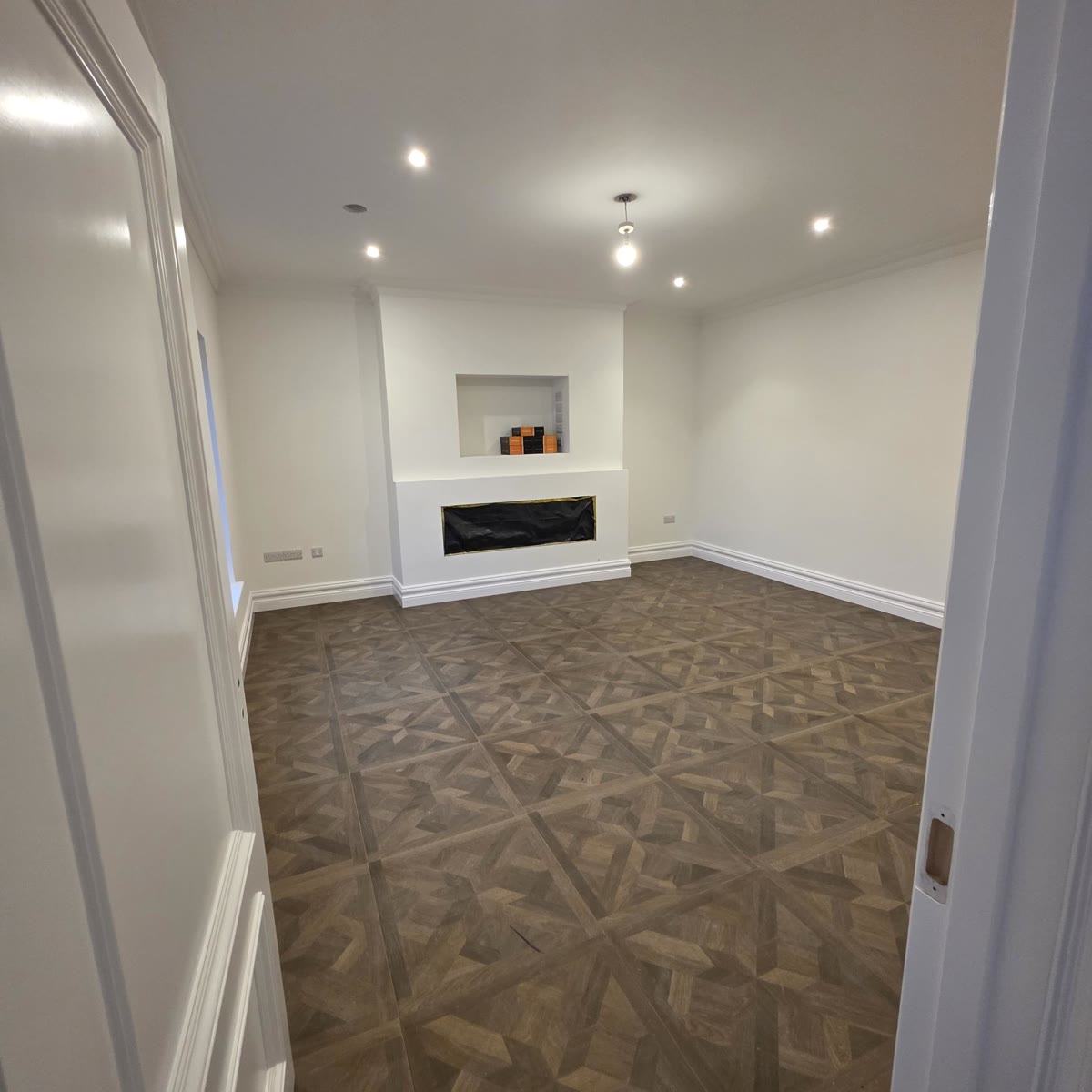
Once the kitchen, doors, skirting, architraves and stairs are fitted, the house goes through a lot of handling. Electricians, joiners and fitters all leave marks. Phase 2 brings everything back to a finished standard:
- Woodwork: skirting, architraves, doors and staircases
- Filling and caulking where joinery meets the wall
- Cutting in sharp lines around fitted items
- Touch-ups and a final coat where walls have been marked
- A snagging walk-through before you move in
Why splitting the work matters
Trying to do everything in one visit at the end usually means painting around a finished kitchen, new floors and fitted wardrobes. Everything has to be protected, spraying becomes difficult, and progress is slower. Splitting the work puts the heavy preparation and spraying where it is easiest and gives you the best finish, then leaves the detailed work for when the joinery is in.
When to book
Talk to your painter while the plastering is under way, not after it is finished. That gives time to visit the site, agree the specification and fit Phase 1 into your build programme without holding up the next trades. If you have a builder, we are happy to plan directly with them.
Quick answers
When should I book a painter for a new build?
Ideally while plastering is under way, so the site visit, specification and dates can be agreed before Phase 1 is due.
What is Phase 1 painting?
Phase 1 is done on bare, dry plaster before second fix: sanding, filling, masking, a full primer coat and spray-applied finish coats on walls and ceilings.
What is Phase 2 painting?
Phase 2 is done after second fix: woodwork, doors, skirting and stairs, cutting in around fitted items, touch-ups and a snagging walk-through.